
Plastic Socket Couplings

Socket Couplings
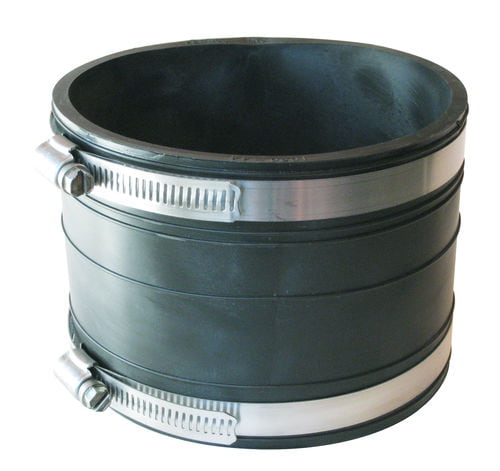
When you can’t glue it, clamp it. Socket couplings connect straight to a PVC or ABS fitting hub, so you can tie in cast iron, work in tight spots and change pipe size right at the hub.
For DWV and other non-pressure lines.
Hub to pipe, or hub to hub.
A PVC or ABS fitting hub is bigger on the outside than the pipe glued into it, so a standard coupling won’t fit over it. Socket couplings are sized to clamp over the hub.

Socket to pipe
A stepped body. The large end clamps over a plastic fitting hub. The small end clamps over plastic or cast iron pipe.
- PVC or ABS Schedule 40 pipe
- No-hub, service weight or extra heavy cast iron pipe
- 1½″, 2″, 3″ and 4″, plus reducing sizes

Socket to socket
A straight body that clamps over two plastic fitting hubs. For two fittings with no pipe between them.
- PVC or ABS fitting hubs
- Joins fittings end to end
- 1½″, 2″, 3″ and 4″
When you can’t glue it.
Clamp onto the fitting that’s already there. No glue, no primer and no cutting the fitting out.
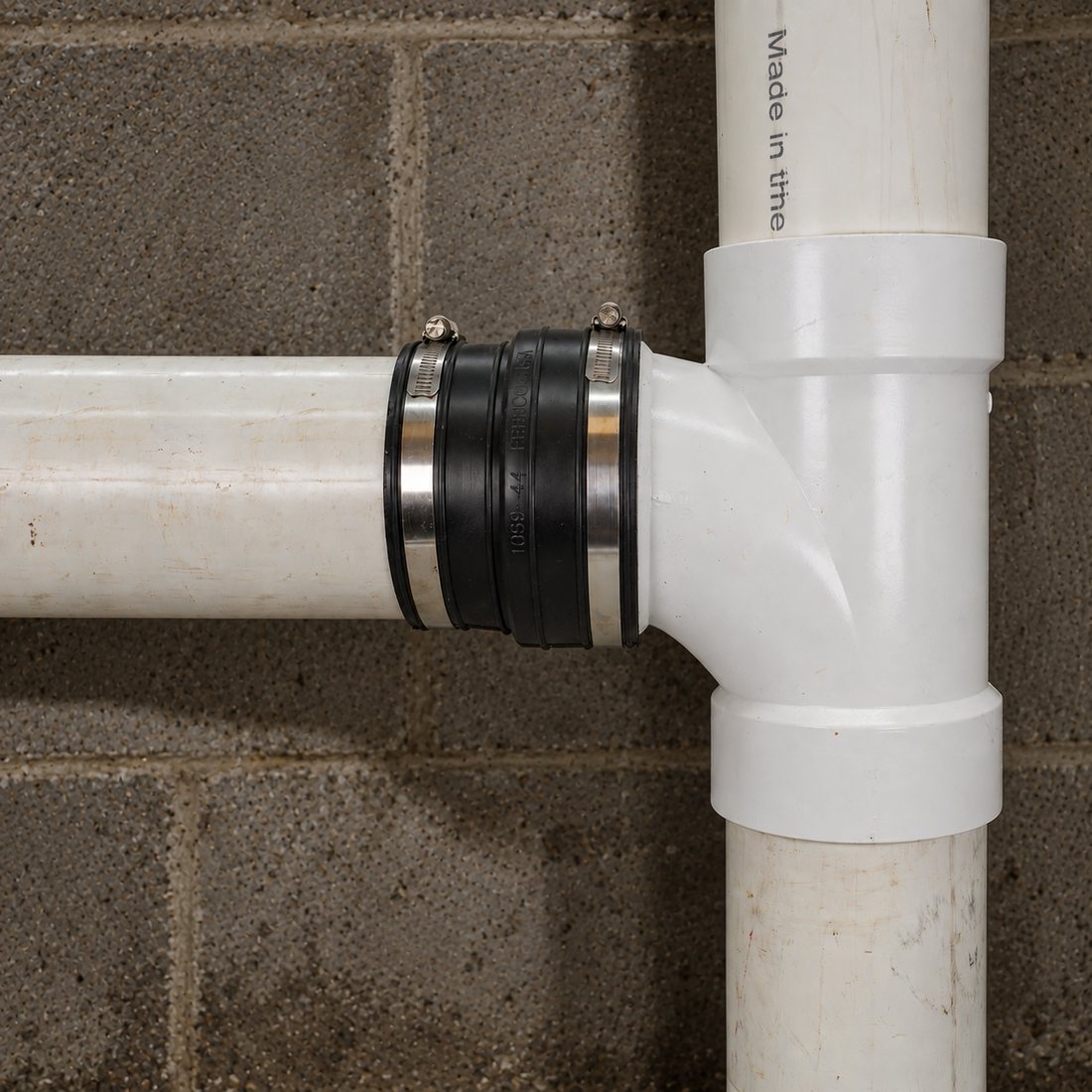
Two systems meet
Tying new PVC or ABS into an old cast iron line? Clamp the cast iron pipe straight onto the new fitting’s hub. One part instead of a coupling and a short piece of PVC.
No room to work
Fitting up against a joist or inside a wall? It only needs room to slide on and tighten the clamps. Trim it to 3″ or 2″ at the molded grooves.
Change size at the hub
Going from a 4″ fitting to 2″ or 3″ pipe? A reducing 1059 does it in one part.
No pipe between
Two fittings end to end? The 1060 clamps over both hubs.
Socket couplings are for DWV and other non-pressure lines. Not for pressure systems such as potable water.
Find your coupling.
Choose the fitting hub size, then what it connects to.
The hub is the socket end of the fitting, where the pipe glues in. Hub sizes vary a little by maker, so if you’re not sure, measure across the outside of the hub and check it against the table below.

Pick a hub size and what it connects to, and your part number shows here.
| Part | Connects | Hub end O.D. | Other end O.D. | Common fit |
|---|---|---|---|---|
| 1059-150 | 1½″ hub to 1½″ pipe | 2.09–2.39″ | 1.80–2.05″ | 1½″ PVC or ABS pipe, 1½″ no-hub cast iron pipe |
| 1059-22 | 2″ hub to 2″ pipe | 2.44–2.87″ | 2.14–2.50″ | 2″ PVC or ABS pipe, 2″ cast iron pipe |
| 1059-33 | 3″ hub to 3″ pipe | 3.68–4.21″ | 3.26–3.78″ | 3″ PVC or ABS pipe, 3″ cast iron pipe |
| 1059-44 | 4″ hub to 4″ pipe | 4.54–5.28″ | 4.11–4.73″ | 4″ PVC or ABS pipe, 4″ cast iron pipe |
| 1060-150 | 1½″ hub to 1½″ hub | 1.93–2.37″ | 1.93–2.37″ | Two 1½″ PVC or ABS fitting hubs |
| 1060-22 | 2″ hub to 2″ hub | 2.10–2.80″ | 2.10–2.80″ | Two 2″ PVC or ABS fitting hubs |
| 1060-33 | 3″ hub to 3″ hub | 3.34–4.15″ | 3.34–4.15″ | Two 3″ PVC or ABS fitting hubs |
| 1060-44 | 4″ hub to 4″ hub | 4.38–5.20″ | 4.38–5.20″ | Two 4″ PVC or ABS fitting hubs |
| 1059-2/150 | 2″ hub to 1½″ pipe | 2.69″ | 1.90″ | Reducing |
| 1059-32 | 3″ hub to 2″ pipe | 3.99″ | 2.38″ | Reducing |
| 1059-42 | 4″ hub to 2″ pipe | 5.01″ | 2.38″ | Reducing |
| 1059-43 | 4″ hub to 3″ pipe | 5.01″ | 3.38″ | Reducing |
O.D. ranges from Fernco product data. Pipe O.D.s used in the finder: Schedule 40 PVC and ABS (IPS), no-hub cast iron (CISPI 301), and service weight and extra heavy cast iron (ASTM A74). Standard part numbers link to dimensional drawings.
Slide it on. Tighten it down.
A flexible PVC body and two stainless steel clamps. No glue, no primer, and the fitting you’re tying into stays right where it is.
Specifications.
| Material | Flexible PVC, 60 Shore A |
| Standards | Complies with ASTM D5926, C1173 and CSA B602 |
| Clamps | 300 series stainless steel |
| Installation torque | 60 in-lb |
| Test pressure | 4.3 psi |
| Temperature | −30°F to 140°F |
| Length | About 4″. Can be cut down to 3″ or 2″. |
| Made in | USA. AIS and BABA compliant. |
| Systems | DWV and other non-pressure lines |
| Hub end | PVC or ABS fitting hubs |
| 1059 pipe end | PVC or ABS Schedule 40 pipe, or cast iron pipe (no-hub, service weight or extra heavy) |
| 1060 | PVC or ABS fitting hub on both ends |
| Sizes | 1½″, 2″, 3″ and 4″, plus 1059 reducing sizes |
Documents.
The catalog page, installation sheet and dimensional drawings for Plastic Socket Couplings.
 Fernco Plumbing CatalogCatalog · page 15View catalog
  Plastic Socket CouplingsInstallation sheetView
 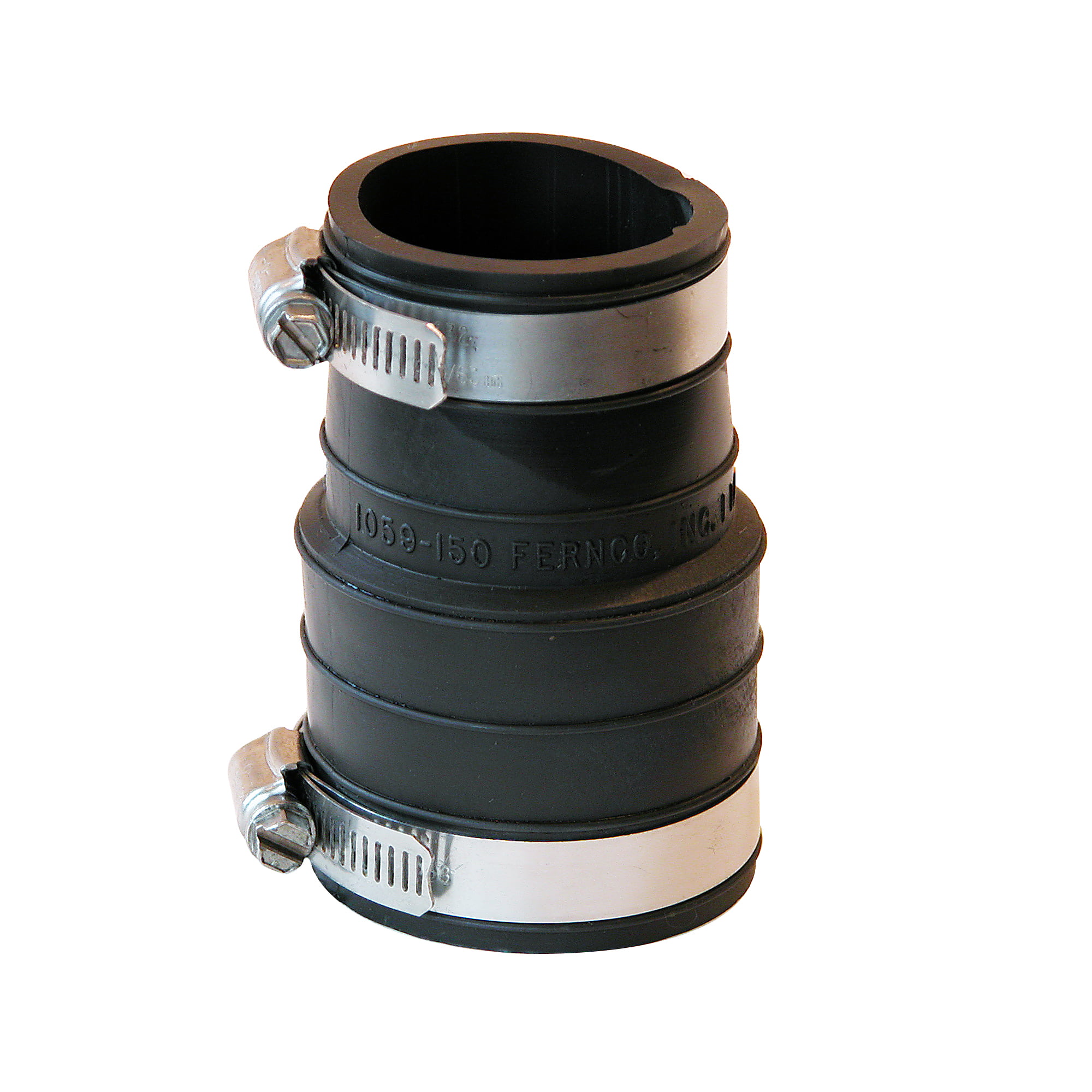 1059-150Dimensional drawing · 1½″ hub to 1½″ pipeDownload PDF
 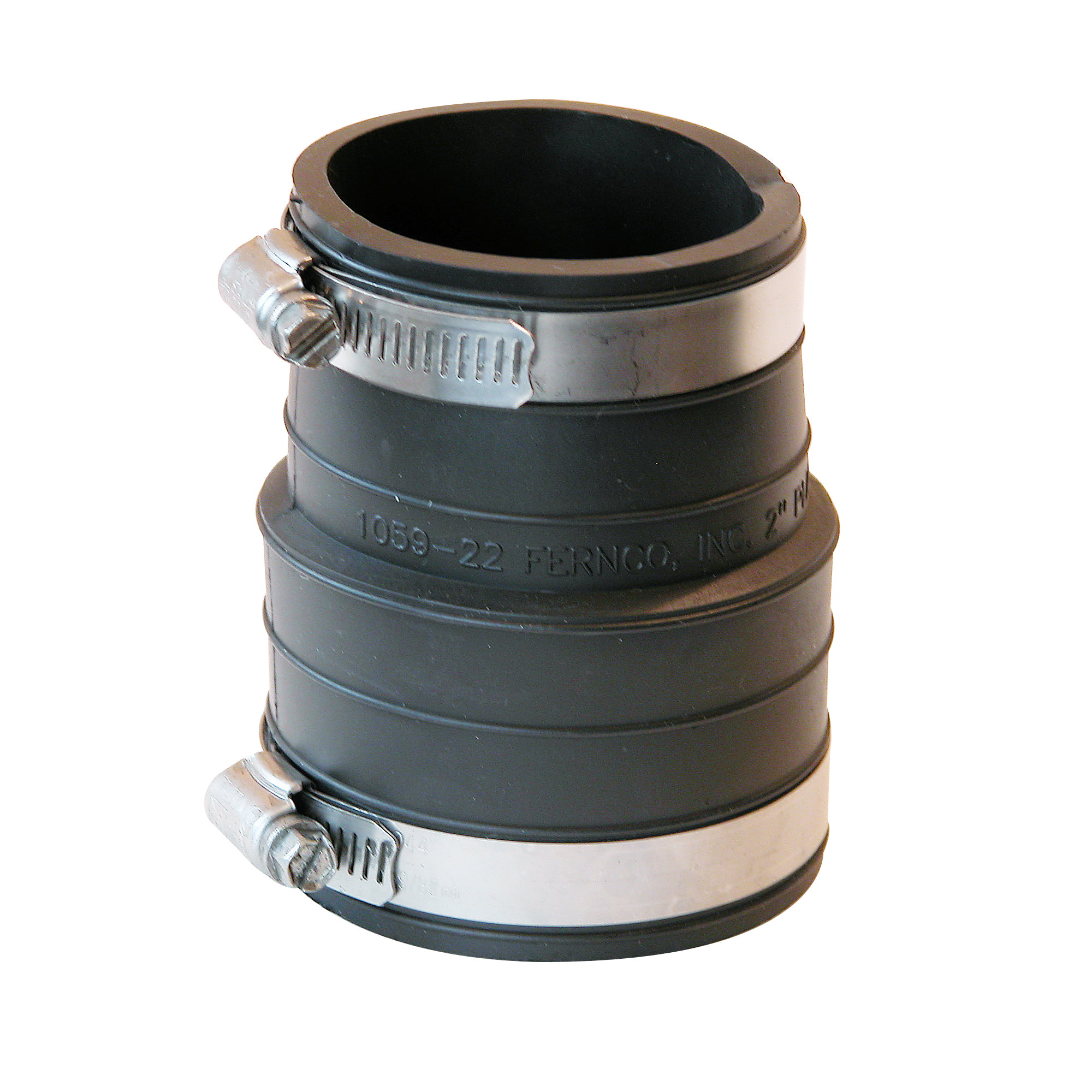 1059-22Dimensional drawing · 2″ hub to 2″ pipeDownload PDF
 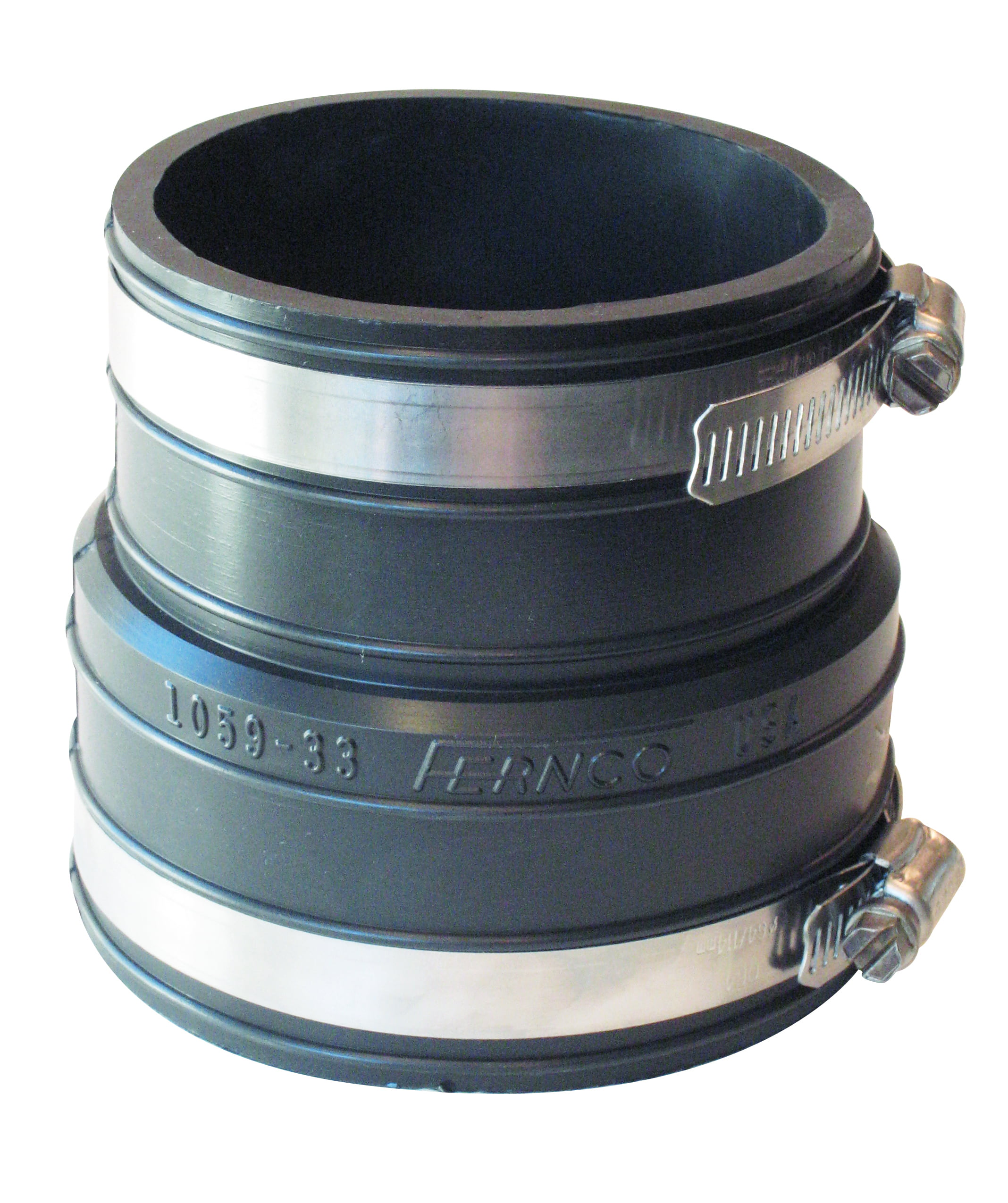 1059-33Dimensional drawing · 3″ hub to 3″ pipeDownload PDF
 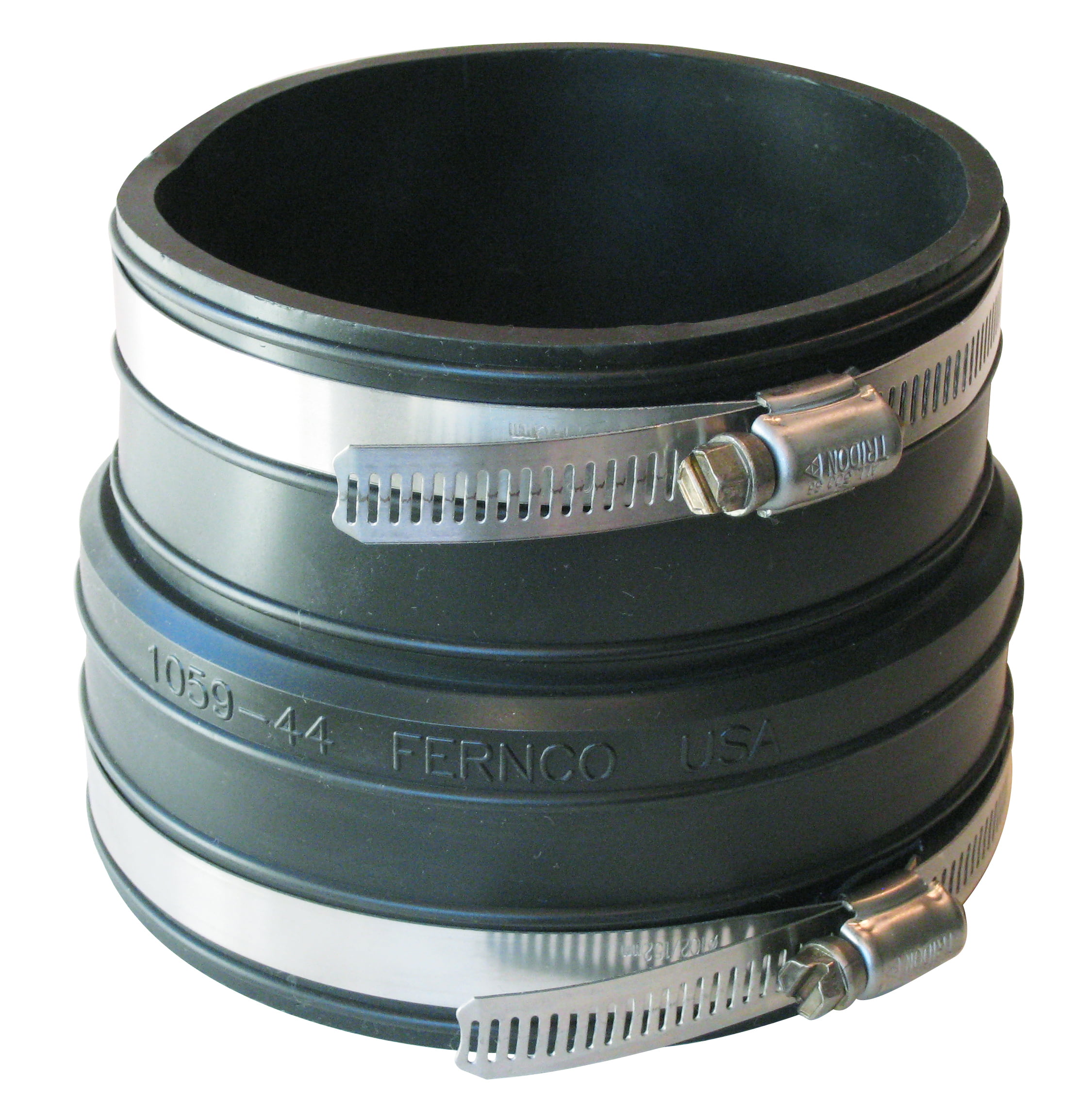 1059-44Dimensional drawing · 4″ hub to 4″ pipeDownload PDF
 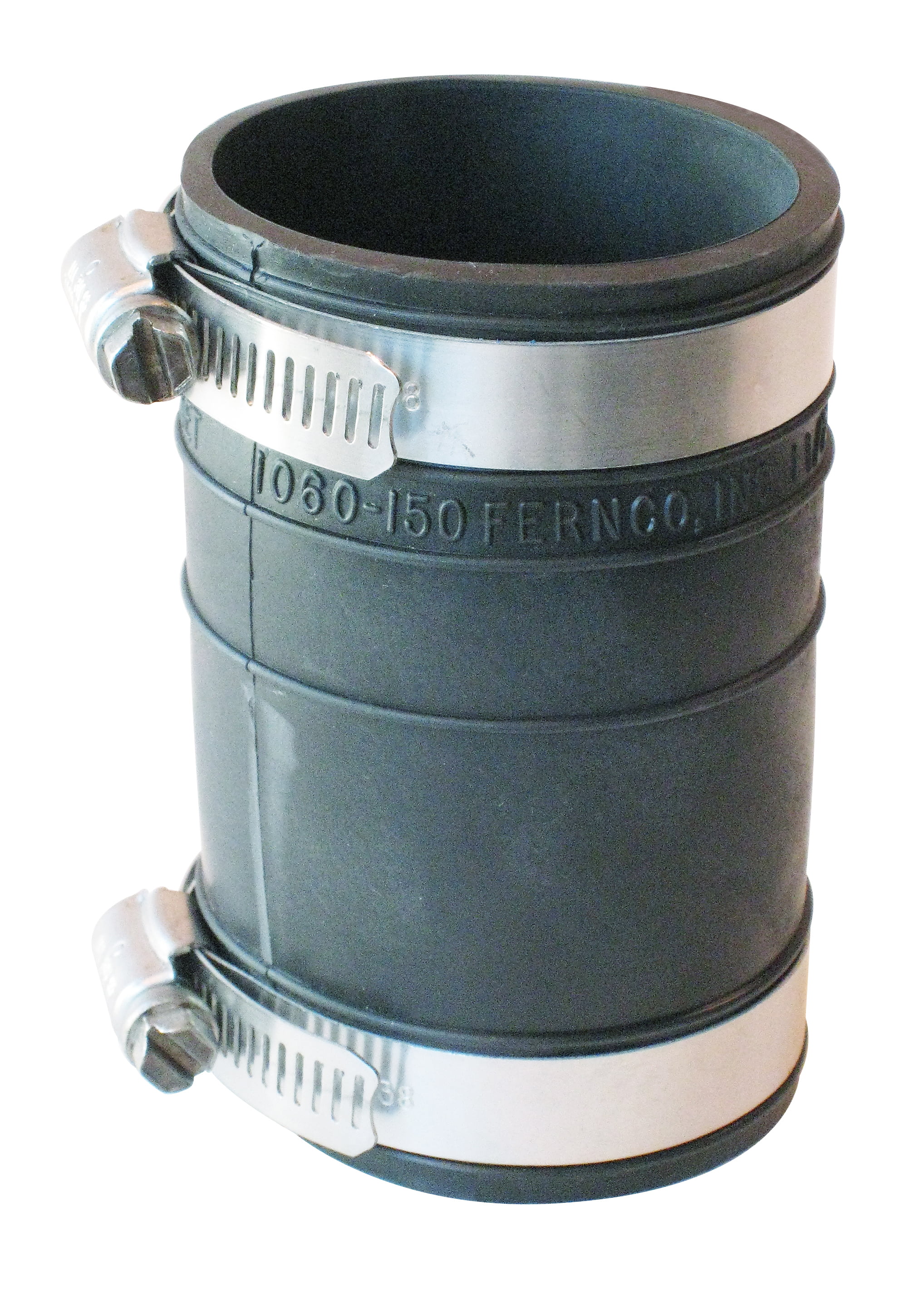 1060-150Dimensional drawing · 1½″ hub to 1½″ hubDownload PDF
 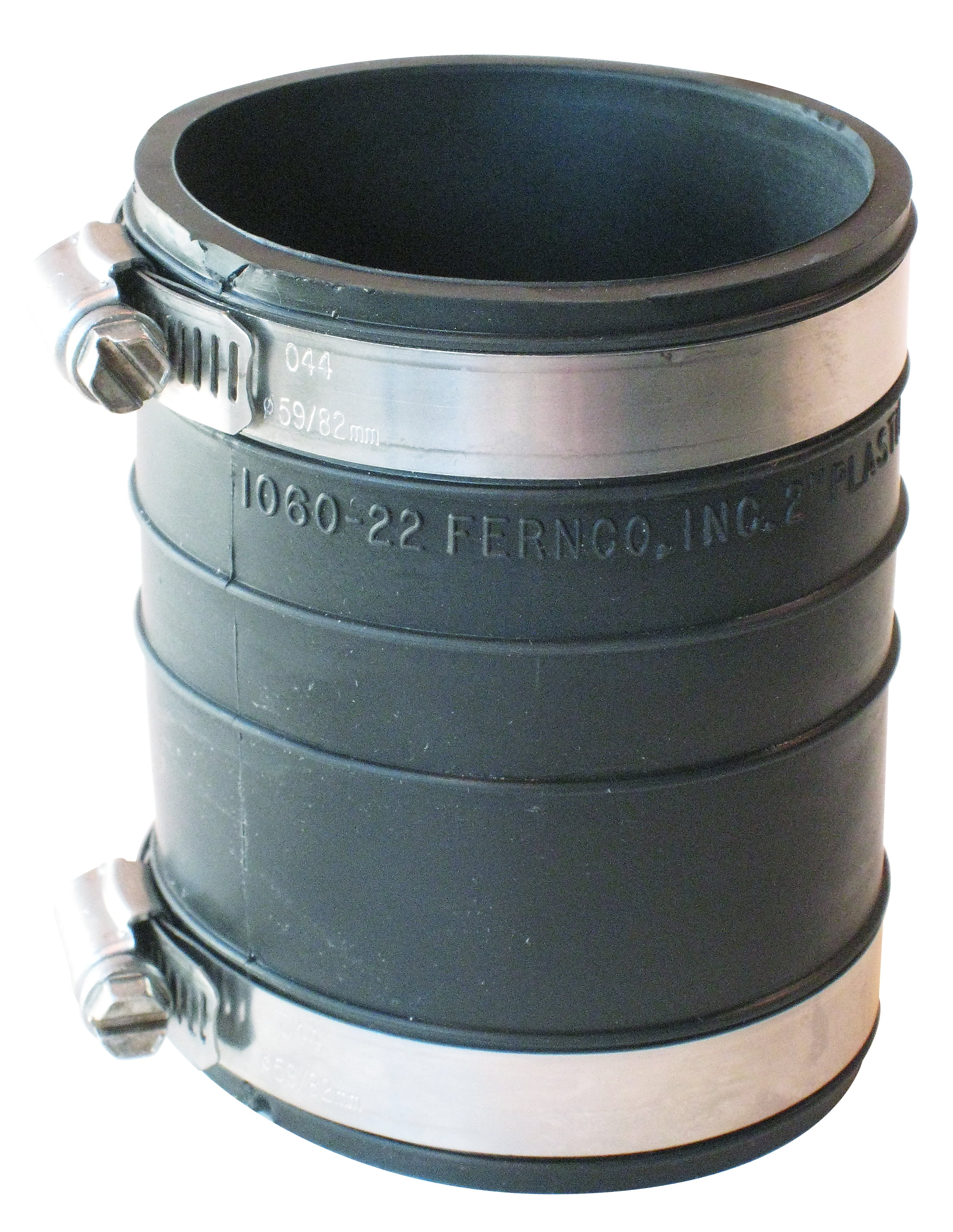 1060-22Dimensional drawing · 2″ hub to 2″ hubDownload PDF
 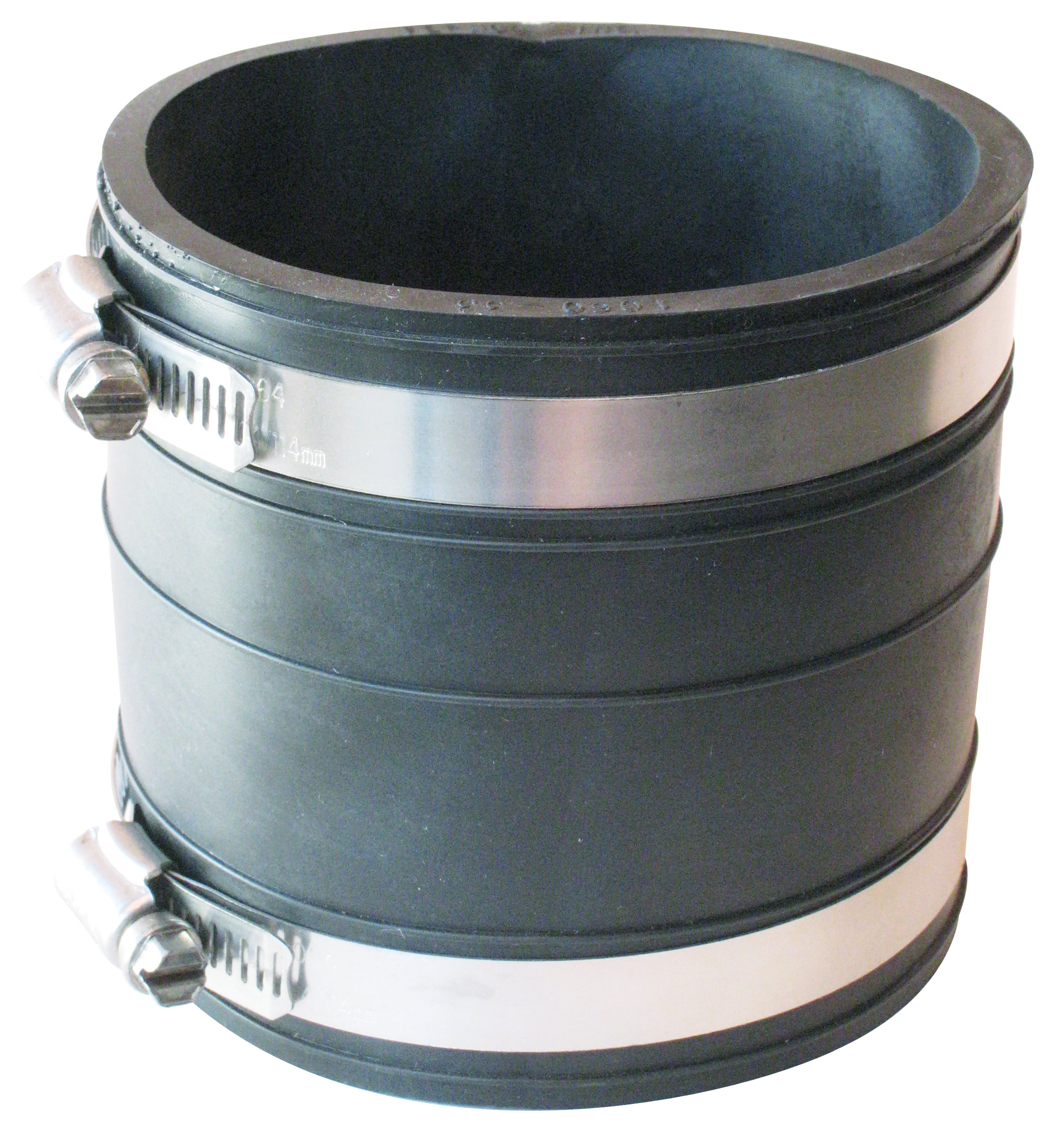 1060-33Dimensional drawing · 3″ hub to 3″ hubDownload PDF
  1060-44Dimensional drawing · 4″ hub to 4″ hubDownload PDF
Frequently asked questions.
Why won’t a standard coupling fit over a fitting?
The hub on a PVC or ABS fitting is bigger on the outside than the pipe. 2″ pipe is 2.375″ O.D., but a 2″ fitting hub is closer to 2.7″. Socket couplings are sized to clamp over the hub.
Which do I need, the 1059 or the 1060?
If the other side is pipe, use the 1059. If the other side is another fitting hub, use the 1060. The size finder picks the part for you.
Does the 1059 fit cast iron?
Yes. The pipe end fits no-hub, service weight and extra heavy cast iron pipe in 2″, 3″ and 4″, and no-hub cast iron pipe in 1½″. It’s a direct way to tie existing cast iron into a new PVC or ABS fitting, especially where there’s no room for a coupling and a short piece of pipe.
Does it work with ABS?
Yes. Socket couplings fit PVC and ABS DWV fitting hubs, and the 1059 pipe end fits PVC and ABS Schedule 40 pipe.
Do I have to get the old pipe out of the hub?
No. The coupling clamps over the outside of the hub, so the piece glued inside can stay.
Can I use it in a tight spot?
Yes. It comes about 4″ long, and you can trim it to 3″ or 2″ at the molded grooves. On the shorter length, the stainless steel clamps sit in the grooves.
Can I go from a bigger fitting to smaller pipe?
Yes. Reducing 1059s connect a 2″ hub to 1½″ pipe, a 3″ hub to 2″ pipe, and a 4″ hub to 2″ or 3″ pipe. The size finder lists them under each hub size.
Can I use it on a water supply line?
No. Socket couplings are for DWV and other non-pressure lines only. Never use them on a pressurized line such as a potable water supply.