
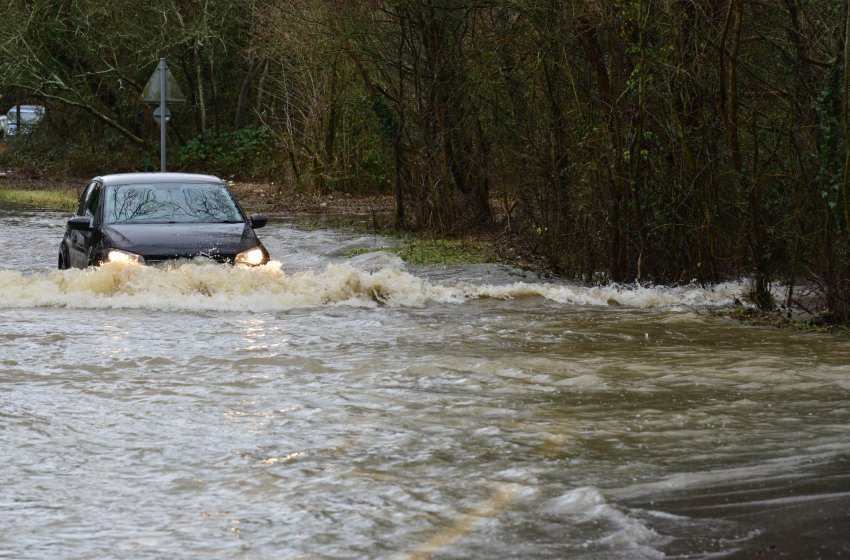
Rain collects along a curb and slips through the nearest grate. Most of us understand what happens next with one word: away. If the street clears and the basement stays dry, the drainage system has done its work without ever introducing itself.
Below that grate, the journey continues through infrastructure most residents will never see. Water follows the route available to it, sometimes by gravity and sometimes with help from a pump, until it reaches an outfall. Along the way, control structures manage openings and help keep a rising creek or river from sending water back into the system. On an ordinary rainy day, this network is easy to overlook precisely because nothing memorable happens.
An intense cloudburst changes the story. The same route that handled last week’s rain can fill faster than it can empty, while the waterway at the discharge end may be rising at the same time. If a gate fails or an aging section of infrastructure cannot perform as expected, water no longer simply disappears. It collects on pavement and presses against doors; in some places, it pushes backward through pipes that were built to carry it away. Hidden infrastructure becomes personal when a family loses a basement or a business cannot open the next morning.
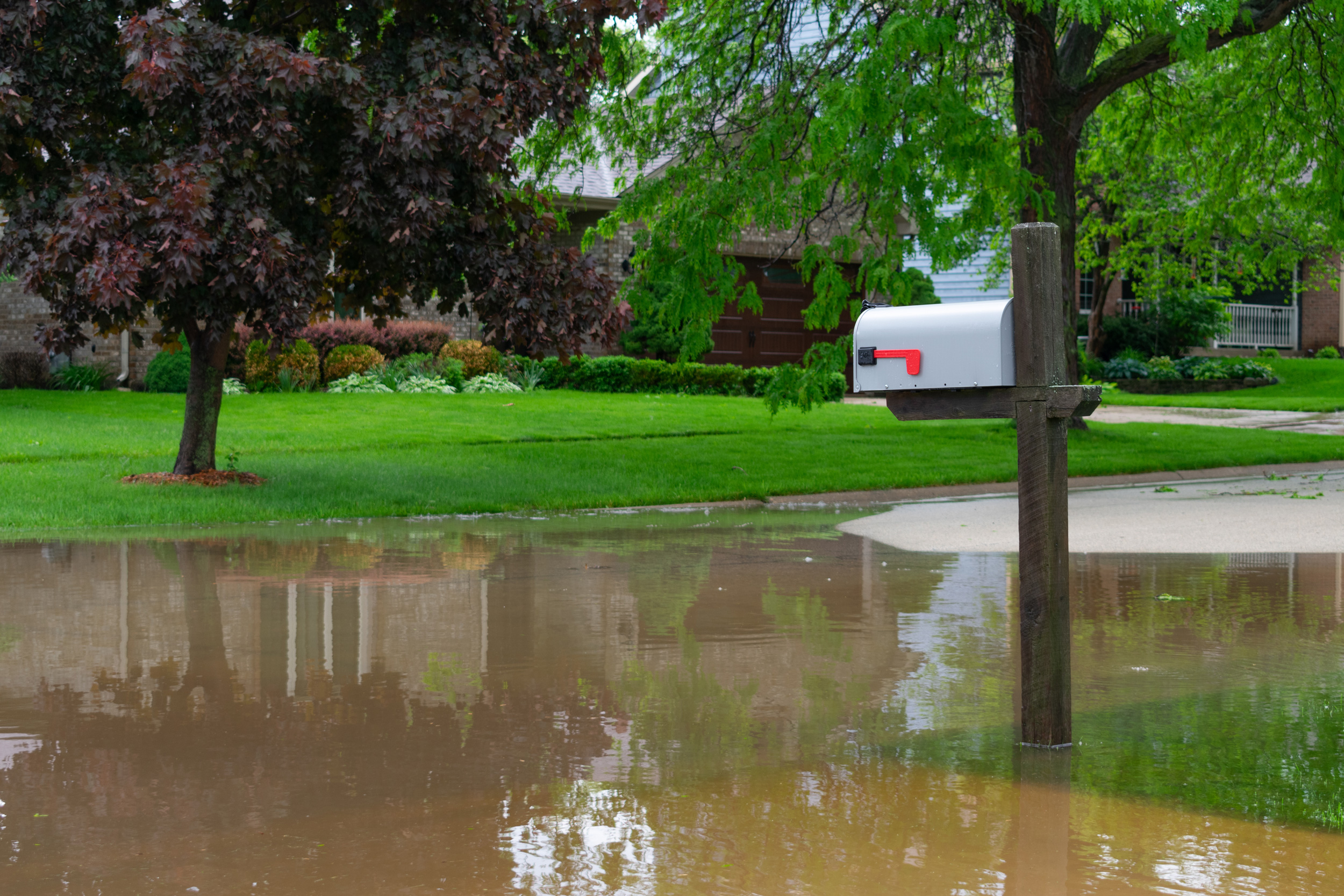
Floodwater reaches a residential street in a Midwestern community, illustrating how quickly a water-management problem can become a household problem. This representative image was not taken during the Cincinnati event. Photo: © James – stock.adobe.com.
When the System Meets More Water Than It Can Manage
The city of Cincinnati, Ohio, experienced that transition on July 17, 2026, when approximately five to six inches of rain fell in about an hour across Oakley, Madisonville, Hyde Park, Pleasant Ridge and Mount Lookout. Roads flooded, water entered homes and businesses, and emergency crews responded as conditions deteriorated within minutes. Sources: City of Cincinnati and WCPO.
The city later determined that an automated roller gate in the Duck Creek floodwall had failed to close because of a mechanical malfunction. The gate is designed to close an opening in the floodwall where Madison Road crosses Duck Creek, helping protect the immediate area when the creek rises.
The malfunction became one of the most visible parts of the story, but city officials cautioned against treating it as the sole cause. The gate protects a relatively small footprint, estimated to include approximately 40 properties, and officials said that the extraordinary rainfall would have caused significant problems even if it had closed correctly. Across the broader area, the Metropolitan Sewer District of Greater Cincinnati received more than 1,500 reports of flooding and possible sewer backups and conducted more than 900 property investigations.
According to WVXU’s reporting on the city’s investigation, Cincinnati had previously studied replacing the Madison Road bridge as another way of addressing the flood risk. That alternative was estimated to cost between $2.3 million and $2.6 million, but officials determined that construction costs, road impacts and effects on surrounding property made the project impractical at the time.
The decision illustrates why water management is rarely as simple as identifying one problem and installing one large solution. Available space, existing infrastructure, upstream development, system capacity, public access and cost all influence what can be built.
Not Every Water-Control Gate Performs the Same Job
The automated roller floodgate across Madison Road is part of a larger floodwall system. It is not the same type of device as a flap valve installed at the end of a stormwater pipe, nor is it the same as a penstock controlling an opening in a chamber or headwall.
All three manage water, but at different points and in different ways. A roadway floodgate closes a large opening in a flood barrier. A flap valve, commonly called a flap gate in North American stormwater applications, provides passive protection against water flowing backward through an outfall. A penstock, often called a sluice gate or slide gate in North America, allows an opening to be isolated or its flow regulated.
The important questions are not simply whether a gate opens and closes. Engineers must consider what pathway it controls, how it responds to changing conditions and what happens elsewhere in the system when it operates.
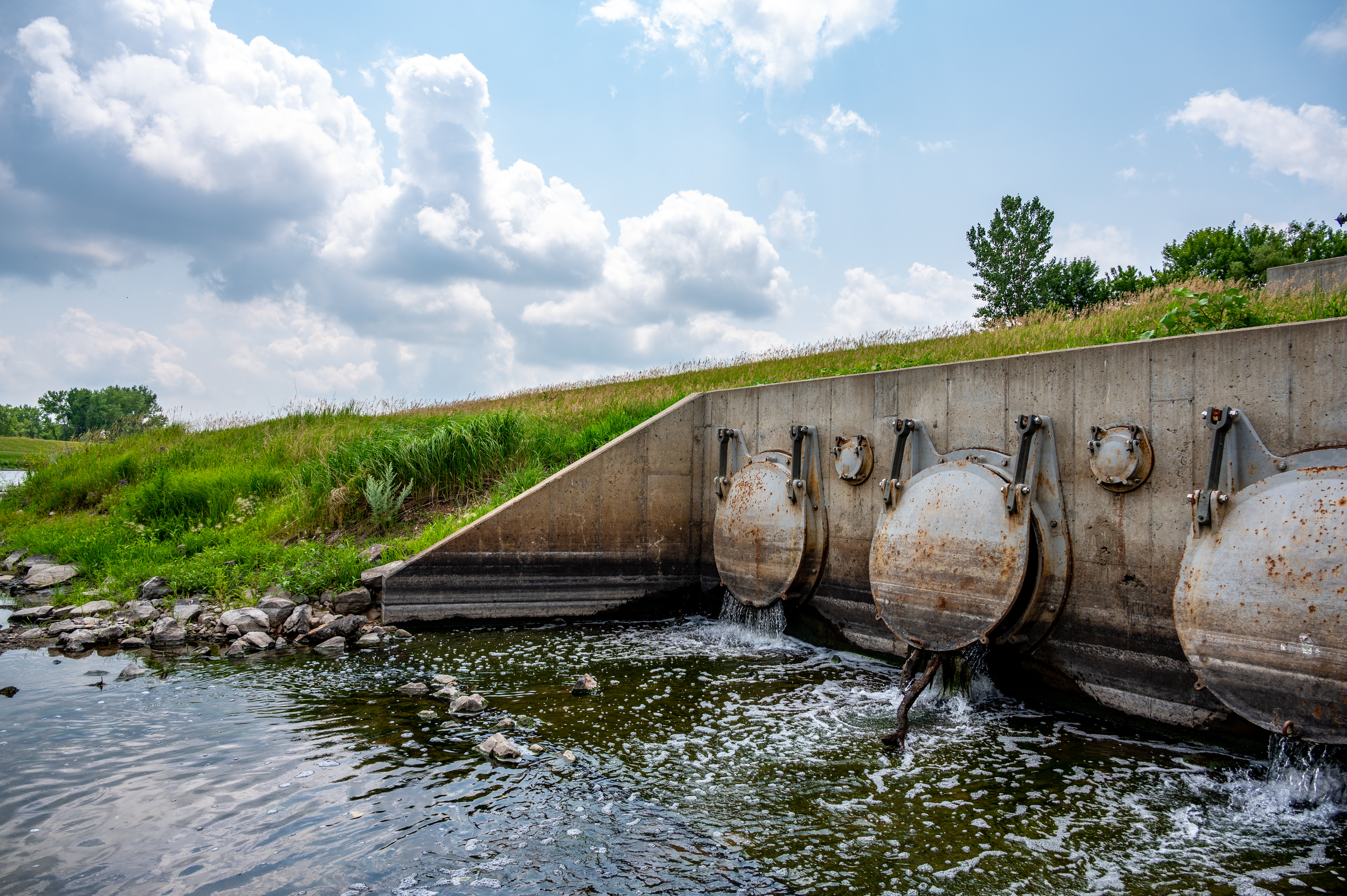
A bank of outfall flap gates illustrates how water-control structures can allow discharge while helping protect a drainage system from rising downstream water. The equipment shown is not the Madison Road roller gate discussed in this article. Photo: © Lost_in_the_Midwest – stock.adobe.com.
Flap Valves and Flap Gates: Protecting the Outfall
A stormwater outfall is intended to be an exit. Water collected from streets and other developed surfaces travels through the drainage network and discharges into a creek, river, retention pond or other receiving body.
When the receiving water rises above the outfall, that direction can reverse. Water may enter the pipe from the discharge end while rainfall continues entering the system upstream, reducing the drainage capacity available where it is needed most.
A flap gate helps control that pathway through a straightforward operating principle. Normal discharge pressure pushes the flap open and allows water to leave. When downstream pressure becomes greater, the flap closes against its seal and helps prevent water from flowing back through the outfall. Because operation is driven by water pressure, it does not depend on a sensor, external power source or operator command.
The device still requires appropriate selection, installation and inspection. Debris around the hinge or sealing surface can interfere with closure, while sediment or an obstruction can restrict movement. A flap gate cannot enlarge the pipe or guarantee that flooding will not occur, but it can help prevent the receiving water from gaining another route into an already stressed drainage network.
Fernco’s North American HMWPE Flap Valves, or flap gates, are available in wall-mounted and spigot-mounted configurations for stormwater outfalls and drainage systems.
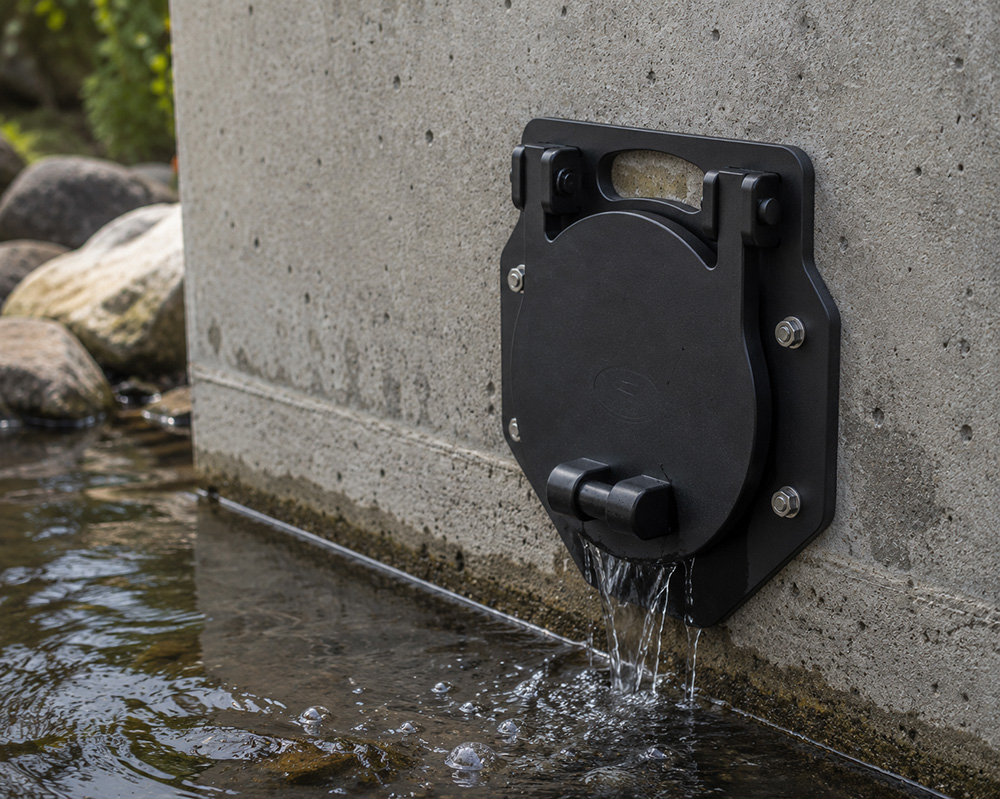
A Fernco Flap Valve provides passive backflow protection at a municipal discharge point, allowing normal outflow while helping prevent downstream water from entering the drainage system. Photo credit: Fernco.
Penstocks, Sluice Gates and Slide Gates: Controlling an Opening
A penstock uses a gate that moves within a rigid frame to open, close or regulate a waterway. Rather than responding automatically to the direction of water pressure, it gives an operator or control system the ability to isolate an opening and manage flow between channels, chambers, tanks or pipe connections.
“Penstock” is common terminology in the United Kingdom and other international water markets. In North American water and wastewater specifications, the same type of equipment is more likely to be described as a sluice gate or slide gate. Depending on the application, it may be operated by a key, handwheel, gearbox or powered actuator.
Penstocks can isolate part of a system for maintenance, regulate stored stormwater or provide a defined shutoff point within a water-management plan. Their effectiveness depends on proper specification and an operating plan that accounts for pressure, access, actuation and what will happen to the water when the gate closes.
Fernco UK offers HMWPE penstocks in standard, rising-spindle, compact and actuated configurations. Penstocks are not currently part of Fernco’s United States product offering, but engineers and infrastructure professionals can explore the Fernco UK penstock range.
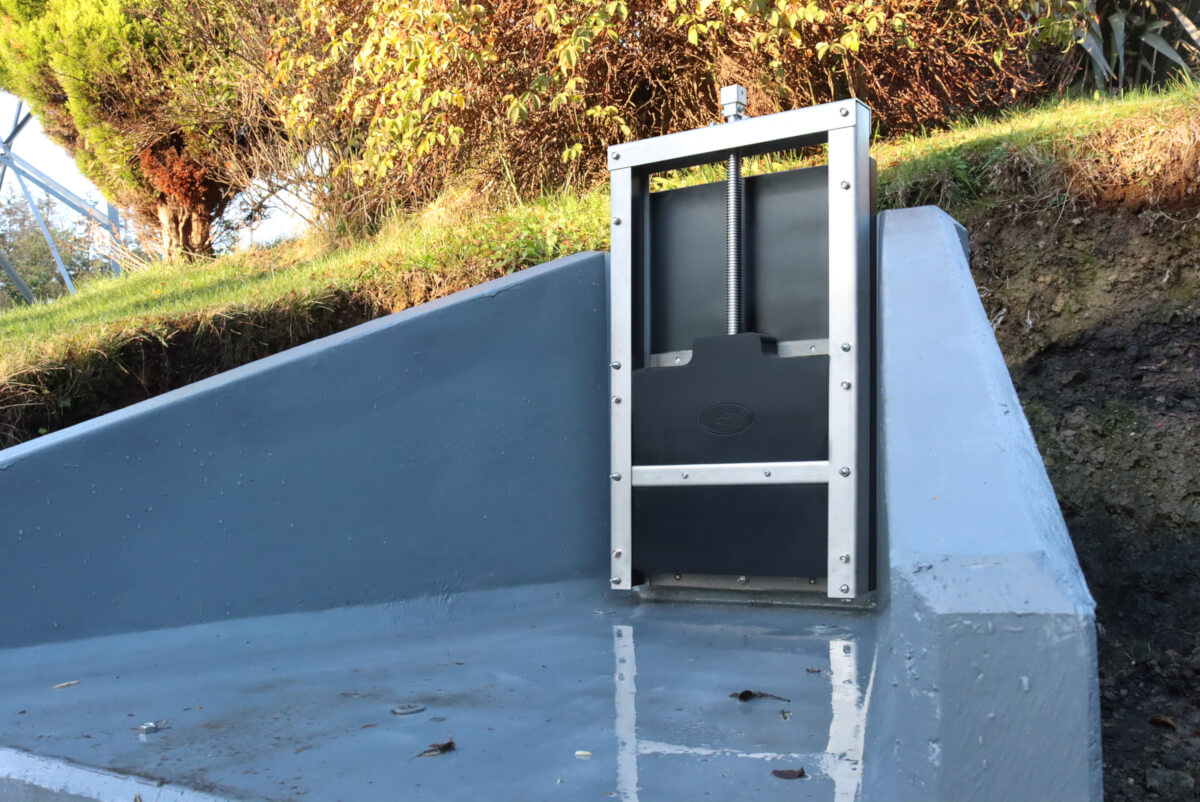
A Fernco UK PS300 penstock mounted to a headwall. Often called a sluice gate or slide gate in North America, a penstock allows an opening to be isolated or its flow regulated. Photo credit: Fernco UK.
Water Management Depends on Layers
The malfunction in Cincinnati did not make one gate responsible for an entire storm, and a correctly operating gate would not have made five or six inches of rain disappear. What the event showed was how quickly an individual control point can become part of a larger public problem when the rest of the system is already under pressure.
Effective water management therefore depends on layers. Surface drainage must collect water, pipes and channels must convey it, storage areas must provide available volume, and pumps must operate when gravity drainage is no longer sufficient. Outfalls must release water without becoming uncontrolled entry points, while gates and other control structures must operate as intended at critical openings.
Every layer has practical limits. A flap gate can help stop reverse flow but cannot enlarge the upstream pipe. A penstock can isolate an opening but cannot determine the correct operating decision on its own. Pumps can move water but remain limited by their capacity, power supply and discharge conditions. Even well-designed infrastructure can be overwhelmed by an event that exceeds the conditions for which it was built.
Recognizing those limits is not an argument against investing in water-control infrastructure. It is the reason the correct devices must be selected, installed and maintained at each vulnerable location. Preventing one additional source of water from entering an already stressed system can protect available capacity, reduce exposure and give operators more options as conditions change.
The Infrastructure Behind “Away”
Most residents will never stand at an outfall or see the inside of a stormwater chamber. They experience the system from the surface, where success is simply a curb that clears and a day that continues as planned.
That ordinary result does not happen on its own. From design through daily maintenance, people across the water-management industry spend their careers learning how each part of the system affects the next. When a storm arrives, that preparation guides decisions made while water levels and conditions continue to change. Their work becomes news when something fails, but its real measure is how often the public never has to think about it.
The Cincinnati flood brought one failed gate into public view, but it also revealed the larger system around it. A flap gate protects a different pathway than the roadway floodgate described in Cincinnati. A penstock serves another purpose by giving operators direct control over an opening. Neither device makes extreme rainfall manageable by itself, just as the larger gate could not have eliminated the impact of the storm. Each has a defined job within the route water is expected to follow, and understanding that route is part of understanding what it takes to make rainwater go away.
Sources
- City of Cincinnati: Flash Flooding—What You Need to Know
- City of Cincinnati: Flood Management
- Metropolitan Sewer District of Greater Cincinnati
- WCPO: Cincinnati Flash-Flood Coverage
- WVXU: Madison Road Floodgate Investigation
- Axios Cincinnati: No Long-Term Fix for East Side Flooding
- Fernco U.S. Flap Valves
- Fernco UK Penstocks